What Does It Really Mean to Explore Himachal? 🏔️
Beyond the postcards: why six months is not enough to understand the life, culture, and everyday struggles behind the mountains.
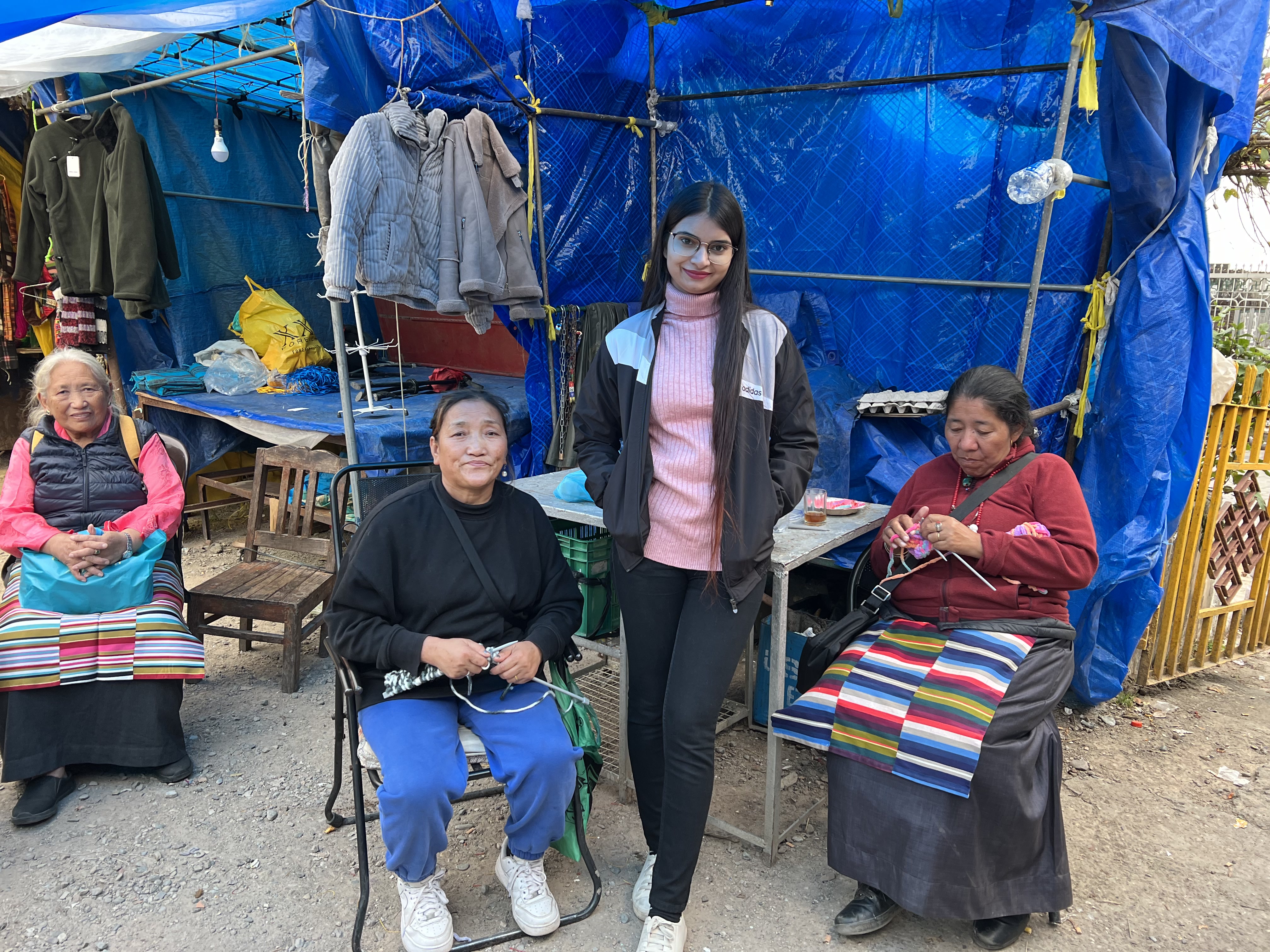
Rama sitting with local Himachali craftswomen weavers at a traditional handloom
My experience has made me realize one thing—to truly explore Himachal, even six months may not be enough.
Because exploring a place does not simply mean going there, staying for two or three nights, clicking some beautiful pictures, seeing snowfall, greenery, rivers, and full trees of fresh fruits, and then coming back home. That is visiting a place. Exploring is something much deeper.
When you truly explore a place, you try to understand its air, water, food, lifestyle, culture, people, and everyday struggles. You don’t just see the place—you try to feel it, live it, and understand it.
Talk to the local people. Ask them how they live when the temperature drops extremely low and the entire area gets covered in snow. Ask them how they manage their daily life when roads are blocked, how they bring food and other essentials home, and how they survive when travelling itself becomes difficult.
When heavy rain comes, many houses in the mountains are still made with wood and other traditional materials. Sometimes water can enter the house easily. So ask them—what do you do during those days? How do you protect your home, your children, and your animals?
Ask questions. Lots of questions. Because when you are exploring a new place, you should be curious about more than just its beauty.
Learn about their food. Learn about their traditions. Learn about their festivals. Learn how they earn their living. Learn how children grow up there. Learn how people survive difficult weather. Learn what makes them happy. And most importantly, listen to their stories.
Every mountain has a story, but you won’t hear it by simply looking at it. You hear it when you sit with the people who live there.
For me, exploring means going beyond the postcard. It means understanding the life behind the beautiful views.
So, just going somewhere, spending two or three nights, seeing snowfall, enjoying the greenery, watching rivers, eating fresh fruits, taking pictures, and returning home is not what I call exploring. That’s a trip.
Exploration begins when you stop being a tourist and start becoming a learner. Maybe that’s why I feel that Himachal needs much more than a few days. You need time to slow down, talk to people, understand their world, experience their lifestyle, and let the mountains teach you something.
Because sometimes, the most beautiful part of a place is not what you see… it is what you understand after you have been there.
Field Photographic Records


Planning a Trip to Himachal Pradesh?
Explore with a trusted female companion. Transparent flat companion fees ($120/day) and zero markups.